Snowflake Cutting Practice, Winter Game: A Strategic Approach to Developing Fine Motor Skills
In the evolving landscape of early childhood education and creative development, the intersection of seasonal engagement and skill acquisition is becoming increasingly vital. One resource that exemplifies this convergence is the Snowflake Cutting Practice, Winter Game. While it may appear at first glance to be a simple seasonal activity, this printable PDF represents a sophisticated tool for fostering essential developmental milestones. For professionals in education, parents navigating at-home learning, and creators designing curriculum, understanding the depth of this resource reveals why it has garnered significant attention in current pedagogical discussions.
The Intersection of Seasonal Themes and Skill Acquisition
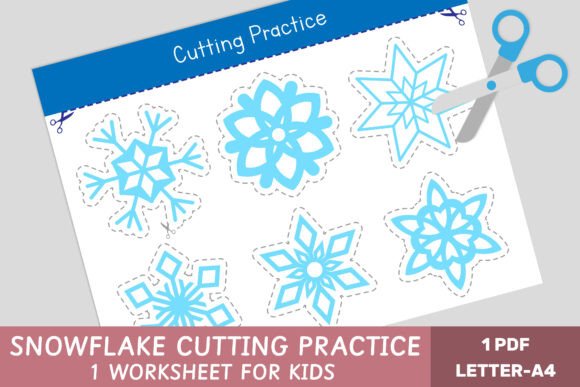
The concept behind the Snowflake Cutting Practice, Winter Game is rooted in the principle of contextual learning. Children learn most effectively when abstract skills are embedded within meaningful, relatable narratives. Winter provides a rich thematic backdrop, but translating that theme into a tangible educational exercise requires careful design. This specific worksheet set moves beyond generic coloring pages by focusing on the precise mechanics of scissor use through six unique snowflake designs.
These designs feature dashed outlines that guide the child's hand, creating a structured path for movement. This structure is not merely decorative; it is a deliberate pedagogical choice. By engaging with the Snowflake Cutting Practice, Winter Game, learners are not just cutting paper; they are participating in a controlled motor task that mimics real-world crafting scenarios. The shift from random scribbling to following a defined line marks a critical transition in a child's fine motor development, bridging the gap between gross motor exploration and refined manual dexterity.
Why the Market is Focusing on Tactile Digital-Physical Hybrids
We are witnessing a broader trend where digital convenience meets physical necessity. In an era dominated by screens, there is a growing demand among educators and parents for resources that facilitate "hands-on" interaction without the logistical burden of sourcing materials. The printable PDF format of this winter game addresses this need directly. It allows users to instantly access high-quality content while ensuring the final product remains a tactile, three-dimensional object.
This hybrid model reflects changing consumer preferences. Parents and educators no longer want to choose between the efficiency of digital downloads and the developmental benefits of physical play. They expect solutions that offer both. The Snowflake Cutting Practice, Winter Game fits perfectly into this workflow, offering immediate utility via download while delivering a traditional craft experience. This adaptability makes it a staple for classroom activities, home schooling routines, and even therapeutic settings where fine motor reinforcement is required.
Analyzing the Mechanics of the Snowflake Cutting Worksheet
To understand the efficacy of this resource, one must look closely at its components. The package includes six unique snowflakes, each designed with varying levels of complexity. This progression is key to maintaining engagement and preventing frustration. As children move from simpler geometric patterns to more intricate, symmetrical designs, they are challenged to refine their grip, wrist rotation, and hand-eye coordination.
The use of dashed outlines serves as a visual scaffold. For young learners, solid lines can sometimes feel intimidating or indistinct. Dotted lines provide clear entry points and directional cues, reducing cognitive load and allowing the child to focus entirely on the physical act of cutting. This design element transforms a potentially difficult task into a manageable Winter Game, where success is measured by the ability to follow the path accurately.
The Role of Material Quality in Learning Outcomes
A critical, yet often overlooked, aspect of any cutting practice is the substrate—the paper itself. The recommendation to print on heavy cardstock is not arbitrary; it is a strategic decision that impacts the learning outcome. Standard printer paper is too flimsy for developing resistance, which is necessary for strengthening finger muscles. When a child cuts through cardstock, they encounter enough resistance to engage their intrinsic hand muscles fully.
This resistance training is fundamental for future tasks such as writing, buttoning clothes, and using tools. By printing the Snowflake Cutting Practice, Winter Game on high-quality paper (US Letter 8.5 x 11 inches or A4 21 x 29.7 cm), educators ensure that the activity provides the necessary physical challenge. Furthermore, the durability of cardstock means the resulting snowflakes can be used for further crafts—such as mobiles, decorations, or collage work—extending the value of the initial cutting exercise.
Integrating the Activity into Broader Educational Workflows
For professionals and creators, the true value of this resource lies in its versatility. It is not a standalone activity but a modular component that can be integrated into larger curricula. In a classroom setting, the Snowflake Cutting Practice, Winter Game can serve as a warm-up exercise before a lesson on symmetry or geometry. In a home environment, it becomes a centerpiece for a winter-themed project day.
The workflow is streamlined for efficiency. Once the PDF is downloaded, the process is straightforward: print on heavy stock, distribute, and let the child cut along the dotted lines. This simplicity reduces preparation time for teachers and parents, allowing them to focus on observation and guidance rather than material setup. The ability to produce multiple copies instantly also supports group dynamics, enabling collaborative play where children can compare their snowflakes and discuss the techniques they used.
Addressing Changing Expectations in Early Development
Modern expectations for early childhood development have shifted towards holistic growth that balances academic readiness with physical capability. There is a heightened awareness of the correlation between fine motor skills and academic performance. Children who struggle with scissors often face challenges with pencil control later on. Consequently, resources like the Snowflake Cutting Practice, Winter Game are being prioritized as preventative measures against these downstream difficulties.
Moreover, the aesthetic appeal of the snowflakes adds a layer of emotional reward. Unlike repetitive drills, the end result is a beautiful object that the child can display. This sense of accomplishment reinforces positive associations with the learning process. It aligns with the broader market trend of "gamification," where educational tasks are wrapped in fun, rewarding experiences to boost motivation and retention.
Practical Implementation for Maximum Impact
To leverage the full potential of this resource, consider the following practical steps:
- Select the Right Paper: Adhere to the recommendation of using heavy cardstock. This ensures the cutting action builds strength rather than tearing easily.
- Optimize Printer Settings: Use your printer's best quality settings to ensure the dashed lines are crisp and distinct. Blurry lines can confuse young eyes and hinder precision.
- Encourage Safe Scissor Use: Use the activity as a teaching moment for safety protocols. Discuss how to hold the scissors, how to rotate the paper instead of the hand, and how to store tools properly.
- Extend the Activity: After cutting, encourage children to fold the snowflakes again or arrange them in patterns. This extends the cognitive benefits beyond the cutting phase.
The Future of Printable Educational Resources
As we look forward, the demand for high-quality, purpose-built printable resources will likely continue to grow. The Snowflake Cutting Practice, Winter Game sets a standard for what these resources should achieve: a seamless blend of aesthetic appeal, pedagogical soundness, and practical usability. It demonstrates that even simple activities, when designed with intention, can yield profound developmental results.
For entrepreneurs and marketers in the education sector, this highlights the importance of quality over quantity. A single, well-designed PDF that addresses a specific developmental need—like fine motor skills through a seasonal theme—is far more valuable than a collection of generic worksheets. It speaks to a consumer base that values expertise, clarity, and results.
Ultimately, the Snowflake Cutting Practice, Winter Game is more than a craft; it is a strategic investment in a child's physical and cognitive toolkit. By providing a safe, engaging, and effective way to practice scissor skills, it empowers children to master a fundamental life skill while enjoying the magic of the winter season. Whether used in a bustling classroom or a quiet home study, this resource stands as a testament to the power of thoughtful design in early learning.